
Practical backyard chicken guides for beginners.

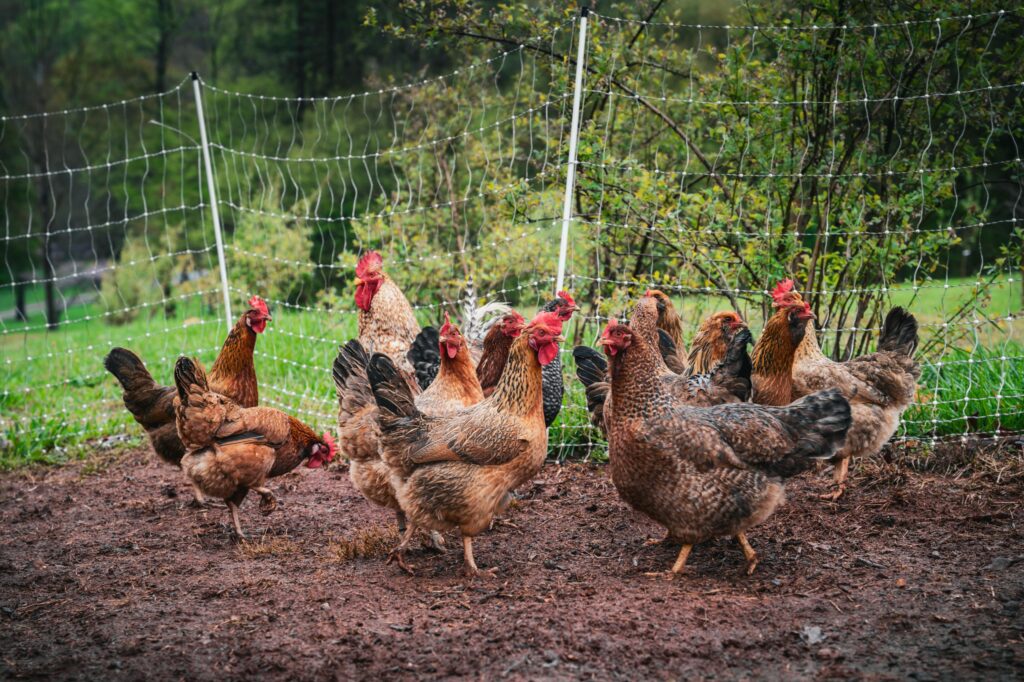
When you first imagine stepping into your backyard with a basket of fresh eggs, the dream feels simple. You picture a few hens pecking peacefully in the grass, the morning sun, and the satisfaction of knowing exactly where your breakfast came from. But before any of that happens, you are standing at the very beginning of the journey with one question that seems small but actually shapes everything else. That question is simple: how many chickens should I start with?
It is not just a number. It is a decision that determines how much space you need, how many eggs you will collect, how much money you will spend, and whether your first year feels like a joy or a chore. I have seen this question answered poorly too many times.
Generic guides throw out a random number like three or six without explaining why. They ignore the fact that a beginner in a suburban backyard in Arizona faces completely different constraints than someone on five acres in Oregon. They also forget that chickens are living animals with social needs, not egg machines you can plug into a coop.
If you are trying to figure out how many chickens should I start with for your specific life, this guide will walk you through the real factors. We will cover egg production honestly, space requirements with actual numbers, costs that go beyond the feed bag, and the flock dynamics that determine whether your birds thrive or just survive. By the time you finish reading, you will know the exact right number for your yard, your family, and your goals.
How Many Chickens Should I Start With? The Short Answer Is Four
If you are here because you want a clear decision before you visit the hatchery, let me give it to you straight. When people ask me how many chickens should I start with, my answer is almost always four. Not two, not ten, and not the vague “three to five” range you see copied across the internet. Four hens hit a balance that is hard to beat for a first-timer. It is large enough to create a stable, self-regulating flock, but small enough that daily care stays under 30 minutes and upfront costs remain reasonable.
Three hens is the number you will see in most basic articles, and it is not a bad starting point. But three leaves you with zero margin for error. Chickens are flock animals, and their social structure depends on having enough members to distribute stress, establish a gentle pecking order, and recover from loss.
If you start with three hens and one dies from a predator strike, illness, or simple old age a few years later, you are suddenly left with two. Two hens is where welfare problems begin. The survivor grieves, often stops laying, and can develop stress behaviors. With four hens, the same loss leaves three birds together, which is still a functional, socially healthy unit.
Four hens also deliver a practical egg supply without overwhelming you. During the spring and summer peak, four productive layers will give you roughly sixteen to twenty eggs per week. That is enough for a family that enjoys eggs for breakfast and baking, but not so many that you are begging neighbors to take cartons off your hands.
It keeps feed bills manageable, coop cleaning to a weekly routine rather than a daily burden, and the learning curve is gentle enough that you actually enjoy the process. Once you have cared for four birds through a full season, you will have the confidence and the infrastructure to decide if scaling up makes sense.
Why Two Hens Is Not the Answer to How Many Chickens Should I Start With
There is a persistent myth that two hens are the perfect soft introduction to poultry keeping. A pair feels less intimidating, cheaper to feed, and easier to house. The reality is that starting with two is one of the riskiest choices a beginner can make, and the problems do not show up until it is too late. Chickens are not companion animals in the way dogs are. They are prey species that evolved to live in groups for safety and social regulation. A flock of two creates a fragile bond with no backup system.
If one of your two hens dies, the remaining bird is suddenly alone. In the chicken world, isolation is a severe stressor. A solitary hen will often go off feed, stop producing eggs entirely, and stand listlessly in a corner of the run. For a beginner who is already learning how to manage feed, water, and coop hygiene, adding a grieving bird to the mix is emotionally draining and practically confusing.
You might think she is sick when she is actually depressed. Worse, if one of your two turns out to be dominant and the other submissive, the weaker bird has nowhere to go. In a group of four or more, a bullied hen can avoid her aggressor by mingling with the others. In a pair, she is trapped in a relationship that damages her health.
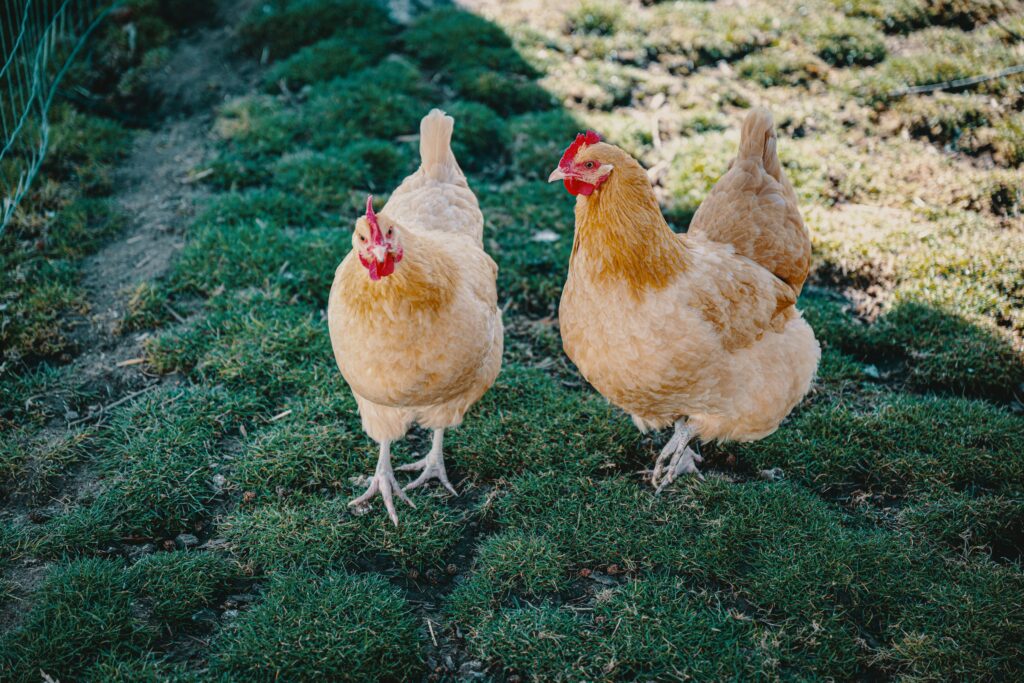
This is why how many chickens should I start with is really a question about resilience. Four birds give you social insurance. They create a diluted, less violent pecking order. They ensure that the loss of one bird, which is statistically likely in the first two years, does not collapse your entire flock’s well-being. If your goal is a low-stress, sustainable introduction to backyard poultry, two is a number to avoid.
How Many Chickens Should I Start With for Eggs?
For most beginners, eggs are the entire point. The vision of walking to the coop each morning and pulling warm, fresh eggs from a nesting box is what starts this whole adventure. But egg production is not a flat guarantee. It varies with breed, season, age, and diet. If you are asking how many chickens should I start with just for eggs, you have to start with honest math rather than fantasy.
A high-production breed like an ISA Brown or a White Leghorn can lay five to six eggs per week during her prime. A heritage breed like a Buff Orpington or a Barred Plymouth Rock might give you three to four. According to USDA guidelines for backyard poultry, production breeds consistently outperform heritage breeds in controlled settings, though backyard conditions vary.
That gap matters. If you buy four Orpingtons expecting twenty eggs a week, you will be disappointed when you get twelve. If you buy four Leghorns, you might end up with more eggs than your household can eat. This is why choosing the right breed is inseparable from choosing the right number. If you have not settled on a breed yet, take a look at our breakdown of the best chicken breeds for small backyards before you make your purchase. The right bird makes the math work.
Seasonal changes are another variable beginners often ignore. Hens lay based on daylight hours. In June, with sixteen hours of sun, your birds will be firing on all cylinders. In December, with eight hours of gray light, production can drop by fifty to seventy percent unless you add supplemental lighting, which many natural-minded keepers prefer to skip. If you are calculating how many chickens should I start with for a steady supply, you have to plan for January, not July.
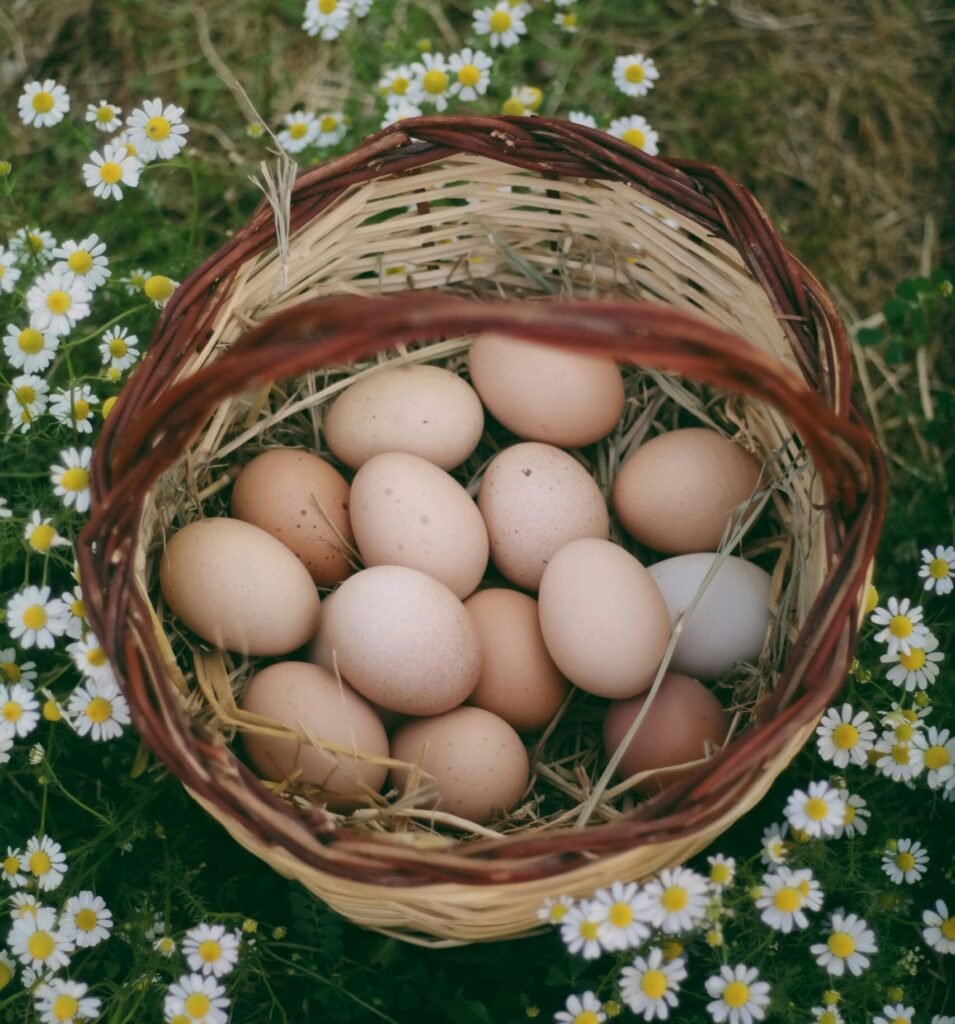
For a single person or a couple that enjoys eggs a few times a week, three hens are usually sufficient. You can expect 10 to 14 eggs per week during the good months, dropping to 5 or 6 in winter. For a family of four that cooks with eggs regularly, five or six hens is a safer bet. Six productive layers will deliver 18 to 24 eggs per week in peak season, enough for breakfast, baking, and the occasional weekend brunch without constant shortages. Here is how that breaks down in practice:
| Family Size | Hens Needed | Eggs/Week (Peak Season) | Eggs/Week (Winter) |
|---|---|---|---|
| 1 person | 2–3 | 6–12 | 3–6 |
| Couple | 3–4 | 9–16 | 4–8 |
| Family of 4 | 5–6 | 15–24 | 7–12 |
| Family of 6 | 7–8 | 21–32 | 10–16 |
Notice the winter column. That drop is real, and it is the reason many keepers end up buying two more hens in their second year. If you want eggs year-round without buying from the store in February, size your flock for the worst month, not the best.
How Much Space Do Chickens Need?
This is the section where most beginner guides let you down. They repeat a generic rule like two to four square feet per bird inside the coop and eight to ten in the run, then move on to the next topic. But space is not just a number on a floor plan. It is the single biggest factor in whether your birds stay healthy, whether they fight, and whether you spend your weekends scrubbing ammonia out of a cramped coop. If you are serious about answering how many chickens should I start with, you have to look beyond survival minimums and think about welfare.
Inside the coop, three to four square feet per hen is the baseline. For the outdoor run, 8 to 10 square feet per bird is standard. Those figures come from university extension guidelines and they work as a starting point. But they come with critical context that is rarely shared. In hot, dry climates, chickens need extra room to dissipate body heat.
Crowding in a desert summer can trigger heatstroke faster than you might expect. In cold, wet climates, birds huddle together, which seems efficient until you realize that huddling creates moisture. A damp, crowded coop is a breeding ground for respiratory infections. The University of New Hampshire Cooperative Extension makes this point clearly: crowding is a primary driver of disease and behavioral issues, and ventilation matters just as much as raw floor area.
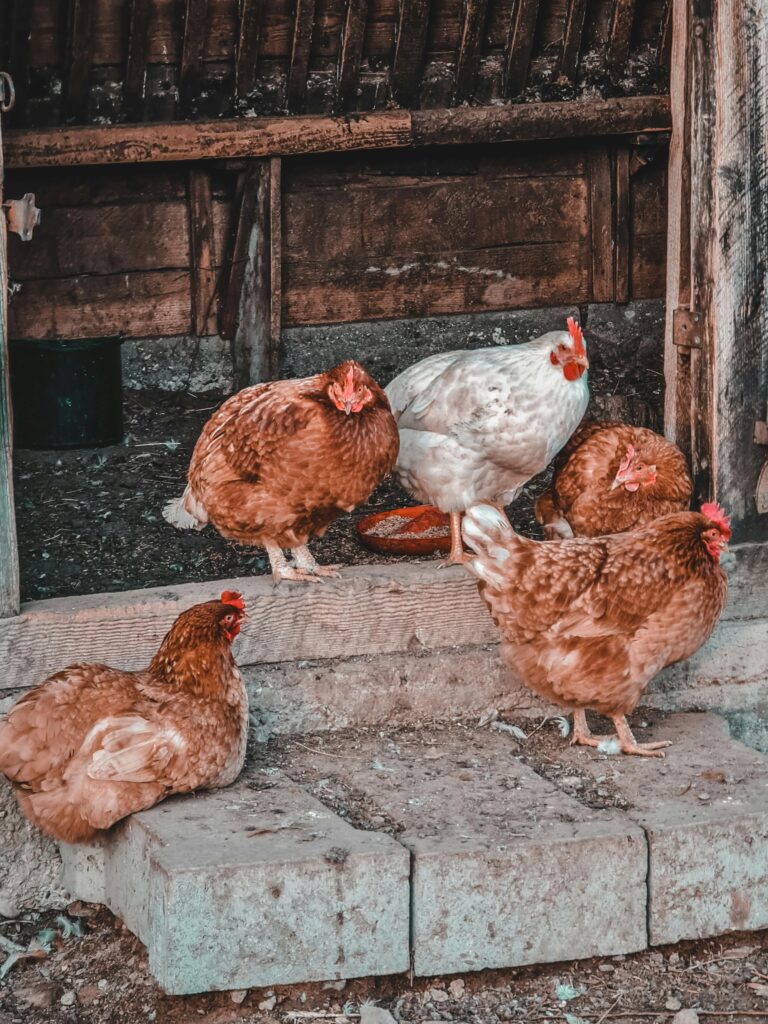
When you ask how many chickens should I start with for a specific flock size, you should calculate both maintenance space and welfare space. Maintenance space is the bare minimum to keep a bird alive. Welfare space is the amount that lets her dust bathe without waiting in line, escape a dominant hen, and sleep on a roost without being jostled. If your yard only allows the maintenance minimum, you should simply keep fewer birds.
Here is what those numbers look like for typical beginner setups:
| Flock Size | Coop Space (Indoor) | Run Space (Outdoor) | Total Footprint |
|---|---|---|---|
| 3 hens | 9–12 sq ft | 24–30 sq ft | ~40 sq ft |
| 4 hens | 12–16 sq ft | 32–40 sq ft | ~55 sq ft |
| 6 hens | 18–24 sq ft | 48–60 sq ft | ~85 sq ft |
These figures assume your birds get daily outdoor access. If they are confined to the coop and run full-time due to local predators or your work schedule, add at least 20% more run space. Bored, crowded birds develop vices. They peck feathers, eat eggs, and bully each other. That is not a temperament problem. It is a space problem.
One more reality check that summer calculators miss: winter confinement. In bad weather, your hens will spend far more time indoors than they do in July. If you sized your coop based on warm-weather behavior, you will discover in December that four birds in a twelve-square-foot coop create an ammonia buildup that stings your eyes. Always size for the worst weather month in your region, not the best.
If you are still planning your coop build, our guide on building a predator-proof coop for under two hundred dollars includes space-efficient designs that do not cut corners on ventilation.
How Many Chickens Should I Start With for a Family of Four?
This is one of the most common specific questions I hear, and it deserves its own clear answer. When a family of four asks how many chickens should I start with, they are usually imagining a household that eats eggs four or five mornings a week, does some baking on weekends, and wants the occasional supply for neighbors or friends. They are not running a commercial operation. They just want breakfast covered.

For that profile, six hens is the comfortable answer. Six productive layers will supply roughly eighteen to twenty-four eggs per week during spring, summer, and early autumn. Even with the winter drop, you will likely still get eight to twelve eggs per week, which is enough to keep the kitchen functional without constant grocery store runs.
Four hens would work for a lighter egg household, but a family of four often underestimates how many eggs they actually use once fresh ones are available. When eggs are free in the backyard, you start adding them to fried rice, pasta, and pancakes without thinking. Six hens give you that freedom.
The other reason six works well for a family is redundancy. With kids involved, there is a higher chance that someone will leave the coop door ajar or forget to lock the run. Predator losses happen. Having six birds means that if you lose one, you still have a flock of five that maintains social balance. A family of four with only three hens that loses one to a raccoon is suddenly in crisis mode. A family with six that loses one is inconvenienced but not devastated.
Space and cost scale gently from four to six. The coop you build for four can usually hold six with minor adjustments. The feed bill rises, but not dramatically, because fixed costs like bedding, grit, and the coop itself are already covered. If you are a family of four standing at the feed store trying to decide, six is the number that gives you eggs, resilience, and room to grow without jumping into overwhelming territory.
The Real Cost of Keeping Chickens
Cost is a practical filter that should influence how many chickens should I start with, and the economics are not as linear as they look. Feed is the obvious variable. Each hen eats roughly a quarter to a third of a pound of layer feed per day, plus whatever kitchen scraps or free-range forage she finds. Over a year, that adds up to about $50 to $100 per bird for feed, bedding, grit, and basic supplements like oyster shell.
But here is what changes the equation: fixed costs. The coop, the feeder, the waterer, the initial bedding stockpile, and your time investment are roughly the same whether you keep three hens or six. A coop that comfortably houses six birds does not cost twice as much as a coop for three.
It might cost thirty percent more in materials. This means the cost per egg actually drops as your flock grows modestly larger. Three hens might cost you two hundred dollars a year to maintain. Six hens might cost three hundred and fifty. You get twice as many eggs for well under twice the money.

If you are trying to decide between three and four hens, the annual cost difference is probably under $75. For most households, that is a trivial difference in terms of the extra eggs and the social stability. If you are trying to decide between four and six, the gap is wider but still reasonable, especially if you have a family that will eat every egg produced. Do not let a tight budget push you into keeping only two birds. The risk and the loneliness factor make two a false economy. Save up for four, or wait until you can afford the right infrastructure.
Thinking Beyond the First Year: How Many Chickens Should I Start With Long-Term?
Most guides treat flock size as a decision you make once at the feed store. They ignore the three-year lifecycle. Here is the truth your hens will not tell you on day one: they lay the most eggs in their first two years. After that, production declines steadily. A hen that gave you five eggs a week at eighteen months might give you two or three by age four. If you start with four hens and never refresh your flock, by year three, you will have a coop full of retired birds eating the same amount of feed but delivering half the breakfast.
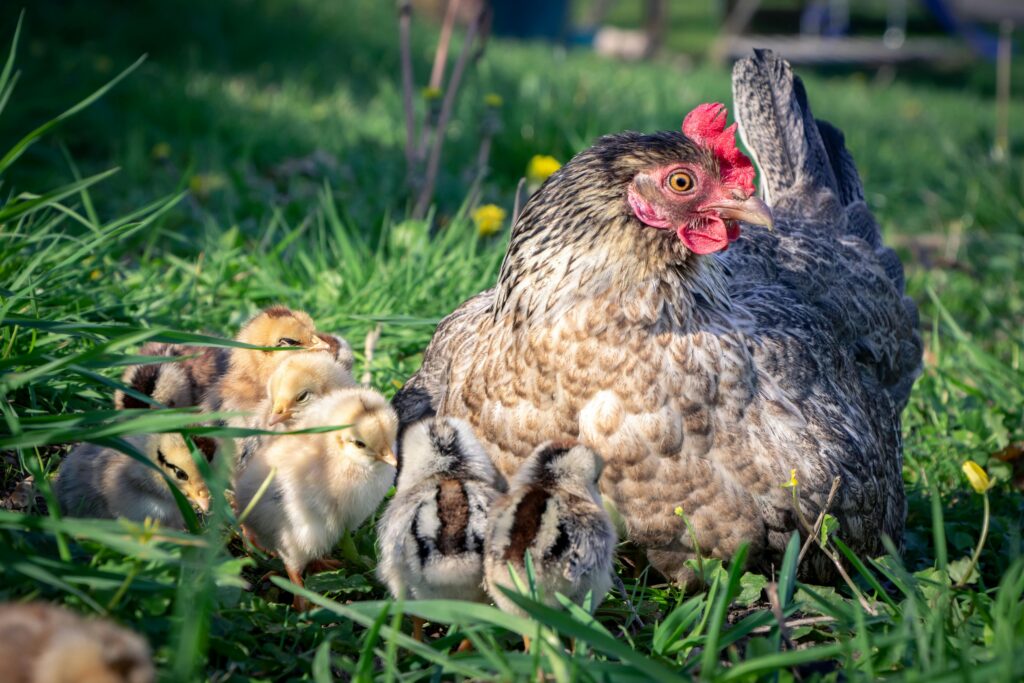
Smart beginners plan for this from the start. One approach is to add two new pullets every other year, so you always have a mix of ages and production levels. Another is to start with a slightly larger initial flock, knowing that natural attrition over three to five years will bring your numbers down to a sustainable level without leaving you eggless. The question of how many chickens should I start with is really a question about how many eggs you need today, plus how many you will need three years from now when your founding hens slow down.
Scaling up also requires a strategy. Introducing new birds to an established flock is one of the hardest management tasks for a beginner. The existing hens will bully newcomers, and the stress can stop laying for weeks. If you start with four and eventually want six, you need a quarantine area and a gradual integration plan. It is far easier to build a coop that holds six birds from the start, start with four, and leave yourself room to add two later, without anyone sleeping in a temporary crate in your garage.
FAQ: What Beginners Actually Ask About How Many Chickens Should I Start With
Can I raise chickens in my backyard legally? Most municipalities allow small flocks of three to six hens. Roosters are often banned in suburban areas due to noise. Check your local zoning ordinances and HOA rules before you buy birds. The three-to-six-hen range is usually the regulatory sweet spot.
Is three hens enough? Three is the functional minimum for social health. It works, but it leaves no margin for loss. If you can manage four, you get more eggs and better flock resilience.
How many nesting boxes do I need? One nesting box for every three to four hens is standard. For a beginner flock of four hens, two nesting boxes is plenty. For ten hens, you would want three or four. Hens often share favorite boxes anyway, so building one per bird is unnecessary.
Do I need a rooster to get eggs? No. Hens lay eggs without a rooster. You only need a rooster if you want fertilized eggs for hatching, which is not a beginner project.
What if I want meat and eggs? Dual-purpose breeds exist, but they are a compromise. They do not lay as well as dedicated layers, and they do not grow as fast as meat breeds. Most beginners are better off starting with egg layers and specializing later if needed.
Should I buy chicks or adult hens? Adult hens, called point-of-lay pullets, are easier for beginners. Chicks require a brooder, heat lamps, and weeks of delicate care. If this is your first time, start with birds that are already sixteen to twenty weeks old and ready to lay within a month or two.
How much space do I really need for four chickens? Four hens need twelve to sixteen square feet of indoor coop space and thirty-two to forty square feet of outdoor run space. If they are confined full-time, add 20% more run space to prevent stress-related behaviors.
How many chickens should I start with if I have a small backyard? Even in a small backyard, four hens is manageable if you plan the footprint carefully. A fifty-five-square-foot total footprint fits comfortably in most suburban yards. If your space is tighter than that, consider three hens, but never go below three.
Your Next Step: Stop Wondering How Many Chickens Should I Start With
You now have the full picture. Four hens is the safest, most productive starting point for a beginner. It gives you enough eggs to matter, enough social stability to prevent disaster, and a low enough cost and time commitment to keep the experience joyful rather than overwhelming. Size your coop for at least six birds even if you only start with four, plan for winter confinement, and choose breeds that match your egg goals and your climate.
If you are ready to move from planning to building, start with the structure. A secure, well-ventilated coop is the foundation of everything else. Our guide on building a predator-proof coop on a budget walks you through exactly that, step by step. Once your space is sorted, picking the right birds becomes the fun part. If you need help matching your flock size to the right personalities, check out our recommendations for the best chicken breeds for small backyards. Grab your notebook, measure your yard, and place your order. Your breakfast is about to get a lot better.




[…] deciding how many birds your space can support without creating humidity problems, our article on ” How Many Chickens Should a Beginner Start With? provides square-footage calculations that prevent the […]
[…] our breakdown in How Many Chickens Should a Beginner Start With? for help sizing your flock correctly from day […]