Practical backyard chicken guides for beginners.
You check the nesting box at dusk. Your best layer has spent three hours sitting there. She has not laid. She stands hunched, tail drooping, legs splayed wide. You feel her abdomen firm and warm. These are the classic signs of an egg bound chicken, a condition that kills hens within 24 to 48 hours without intervention. This guide gives you the exact steps to recognize, treat, and prevent egg binding in your backyard flock.
What Is Egg Binding in Chickens?
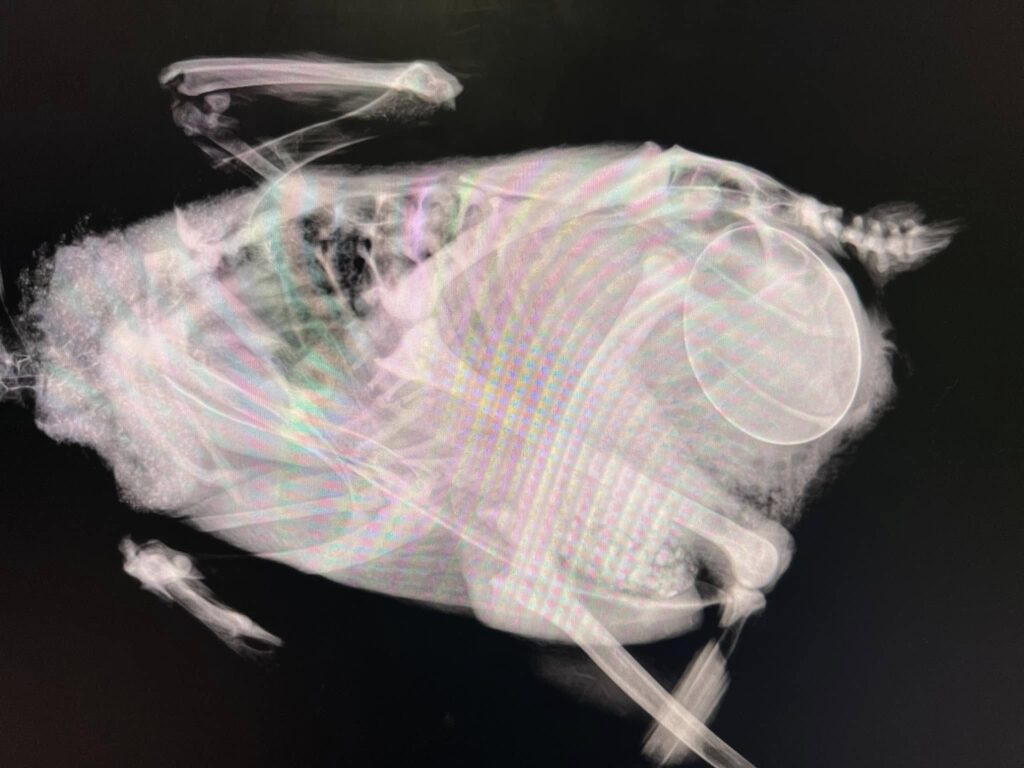
Egg binding (dystocia) occurs when a fully formed egg lodges in a hen’s oviduct and cannot pass. The oviduct is a single long tube that transports the yolk, wraps it in albumen, adds membranes, and deposits the shell. The entire process takes roughly 25 hours. Binding usually happens at the end of this tube, near the cloaca, where the egg rotates before exiting.
When an egg bound chicken cannot expel the shell, the cloaca blocks completely. She cannot pass droppings. Toxins build up. The pressure damages internal organs and compresses air sacs. Within hours, shock sets in. The condition differs from egg yolk peritonitis, which is an internal infection from a ruptured follicle, and from cloacal prolapse, which shows red tissue protruding from the vent.
| Condition | What It Is | Key Visual Sign | Time to Fatal |
|---|---|---|---|
| Egg Binding | Egg stuck in oviduct | Hard mass near vent; penguin walk | 24–48 hours |
| Egg Yolk Peritonitis | Abdominal infection | Spongy fluid-filled belly; yolk discharge | Often fatal |
| Cloacal Prolapse | Tissue protrudes through vent | Red tissue visible outside vent | Tissue dies fast |
How to Tell If a Chicken Is Egg Bound: 7 Warning Signs
Hens hide illness by instinct. Egg binding produces signs that observant keepers catch early. The seven most reliable indicators of an egg bound chicken include repeated nesting box visits with no egg produced, tail pumping with visible straining, and the characteristic penguin walk. You will also notice lethargy and isolation from the flock, complete loss of appetite and thirst, a swollen warm abdomen, and abnormal or absent droppings.
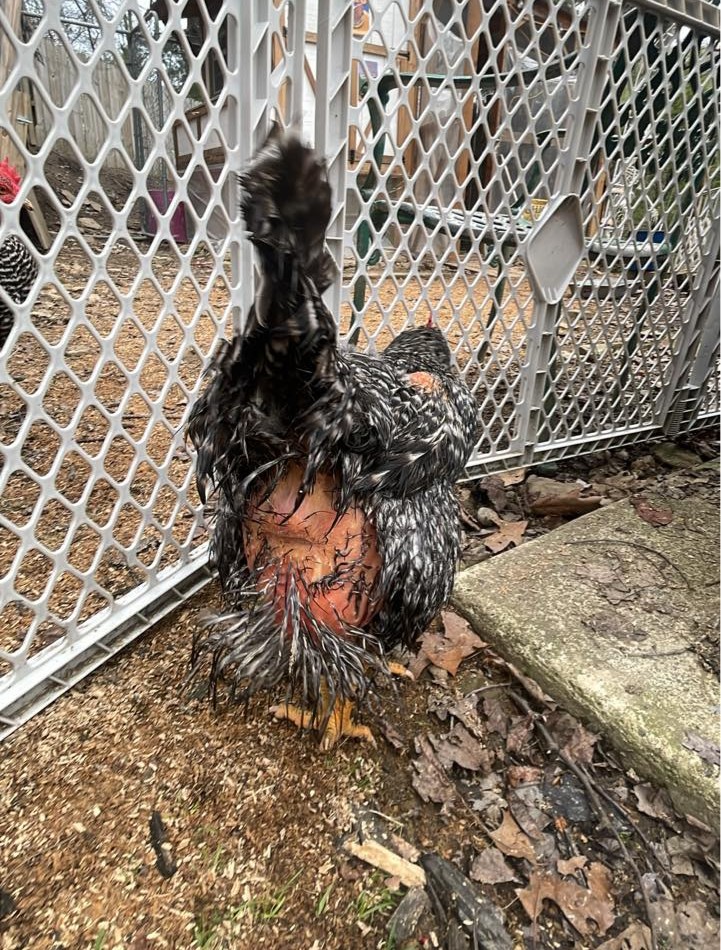
The penguin walk has a mechanical cause. When the egg lodges low in the oviduct, it pushes backward on the pelvis and interferes with normal leg positioning. The hen spreads her legs wider to relieve cloacal pressure and shifts weight backward, creating that upright waddling gait. Not every egg bound chicken displays this posture; some sit still and appear depressed, but when you see it, act immediately.
The Early vs. Late Symptom Timeline
Table
| Stage | Timeframe | What You See |
|---|---|---|
| Early | 0–6 hours | Frequent nesting, mild straining, slight lethargy, still eating some |
| Moderate | 6–12 hours | Penguin walk, tail pumping, swollen vent, reduced appetite |
| Late | 12–24 hours | Lethargic, eyes closed, pale comb, open-mouth breathing, no eating |
| Critical | 24–48 hours | Collapsed, unresponsive, severe breathing distress, tissue prolapse |
Learning these stages matters because each hour reduces survival odds. Beginners who mistake an egg bound chicken for a broody hen lose precious time. A broody hen flattens herself protectively on the nest and clucks when disturbed. An egg bound chicken looks distressed, not maternal.
How Long Can a Chicken Be Egg Bound?
A chicken can survive 24 to 48 hours while egg bound. Beyond that window, death becomes likely from shock, infection, or organ failure. The 24-hour mark represents severe danger. At 12 hours, most hens need intensified treatment or veterinary care.
This timeline terrifies keepers. I have seen hens recover by the 18-hour mark with repeated warm baths and calcium supplementation. I have also seen hens die at 14 hours because their keepers waited too long. The speed of decline depends on the hen’s age, body condition, and how high the egg sits in the oviduct.
How Long Can a Chicken Be Egg Bound Before Dying?
Death from egg binding typically occurs after 24 to 48 hours without intervention. Some hens deteriorate faster — obese birds, very young pullets, and older hens over five years face a higher risk. The most common cause of death is shock from dehydration and toxin buildup. A broken egg inside the hen causes egg yolk peritonitis, a rapidly fatal infection that can kill within hours.
Egg Bound Chicken Treatment: The 6-Step Home Protocol
Home treatment works when you catch the condition early. The goal is to relax the oviduct muscles, provide calcium for contractions, maintain hydration, and create a stress-free recovery space. Follow these steps in order.
Step 1 — The Warm Epsom Salt Bath
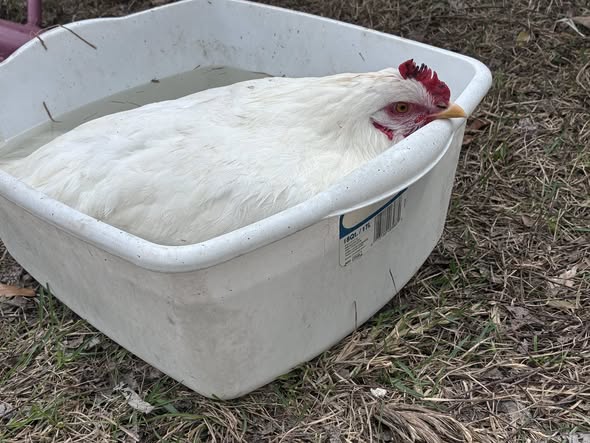
Fill a basin with water at 102 to 104 degrees Fahrenheit. Use a thermometer; the Rooster Booster Poultry Bath Thermometer (~$8 on Amazon) takes the guesswork out. Add one cup of Epsom salts per gallon of water. The magnesium sulfate in the salt relaxes smooth muscle tissue. Water depth should reach just above the vent, covering the lower abdomen. Soak the hen for 15 to 20 minutes while supporting her body so her head stays above water. Dry her completely with a towel or blow dryer on low between soaks. Repeat every 1 to 2 hours until the egg passes. Most hens need 3 to 4 baths over several hours.
Step 2 — Lubrication
After each bath, apply water-based personal lubricant around and just inside the vent. A tube of KY Jelly (~$5 on Amazon) works perfectly, it reduces friction and helps the egg slip through the cloaca. Do not push lubricant deep into the tract. A small amount at the opening suffices.
Step 3 — Gentle Abdominal Massage
With the hen calm and dry, place your hands on either side of her lower abdomen. Stroke gently downward toward the vent using light, continuous pressure. Follow the natural path of the egg. You should feel a smooth, firm, egg-shaped mass if the egg sits low in the tract. If you cannot feel it, do not press harder; the egg may be higher up, and force can break it.
Step 4 — Calcium Supplementation
Calcium fuels the uterine contractions that push the egg out. Without adequate calcium, the oviduct muscles cannot function. Several options exist for home use. The Rooster Booster Liquid Calcium (~$12 on Amazon) delivers fast oral absorption — draw 1 to 2 ml into a syringe without a needle and place drops at the side of the beak. Crushed Tums tablets (calcium carbonate) work in a pinch — crush one tablet and mix with water or a favorite treat. For ongoing prevention, keep Manna Pro Oyster Shell (~$8 on Amazon) available free-choice in a separate dish so hens self-regulate intake.
| Calcium Source | Dose for Standard Hen | How to Give It |
|---|---|---|
| Liquid calcium 23% | 1–2 ml orally | Syringe drops at side of beak |
| Crushed Tums | 1 tablet crushed | Mix with water or treat |
| Poultry liquid calcium | Follow label (~1 cc) | Add to water or syringe orally |
| Oyster shell free-choice | Small dish available | Provide immediately with feed |
Step 5 — Hydration and Electrolytes
Dehydration worsens egg binding because dry muscles cannot contract. Offer electrolyte-enhanced water immediately. The Sav-a-Chick Electrolyte & Vitamin Supplement (~$6 on Amazon) dissolves easily in water and encourages drinking. You can also mix a homemade solution: half a teaspoon of potassium chloride salt substitute, one teaspoon of baking soda, one teaspoon of table salt, one tablespoon of sugar, mixed into one gallon of clean water. Offer this as the sole water source for 4 to 6 hours, then return to fresh plain water.
Step 6 — The Windmill Technique (Last Resort Only)
This technique uses centrifugal force to dislodge an egg that sits right at the vent but will not emerge. Hold the hen’s wings against her sides with her bottom facing down. Spin her in a circular windmill motion with increasing speed. The centrifugal pull may draw the egg outward.
This maneuver carries real risk. A broken egg causes peritonitis. Prolapse or oviduct injury can occur. Only attempt this when the egg is clearly felt at the vent opening, all other methods failed, veterinary care is unavailable, and the hen will die without intervention. Many experienced keepers report success. Others have caused fatal complications. If you lack confidence, skip this and continue repeated warm baths while contacting a veterinarian.
Step 7 — Create the Recovery Environment
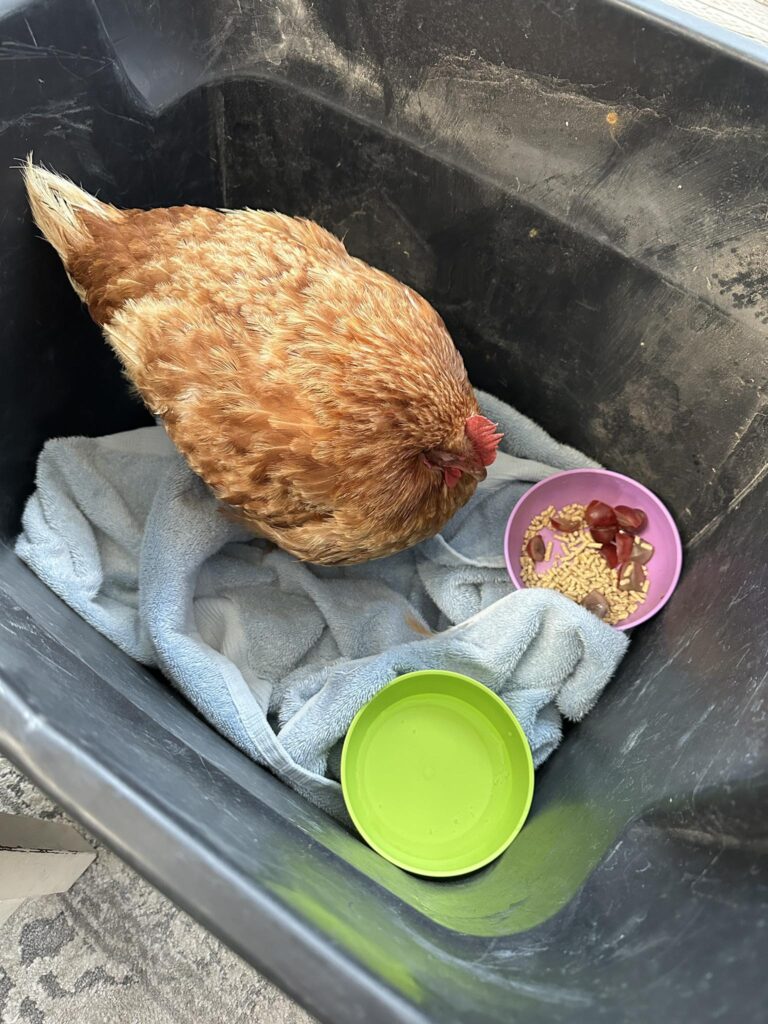
Between treatments, place the hen in a quiet, dark, warm space between 70 and 80 degrees Fahrenheit. A MidWest Homes Large Dog Crate (~$45 on Amazon) lined with soft towels works well as a recovery unit. Darkness encourages relaxation. Minimize noise and handling. Keep feed and electrolyte water within reach. Do not return her to the flock until she has passed the egg and recovered strength — stress from other chickens prevents the relaxation she needs.
When to Take an Egg Bound Chicken to the Vet
Home treatment has limits. Call the veterinarian immediately if your hen has collapsed or cannot stand, shows open-mouth breathing, or displays a bluish-purple comb. Prolapsed tissue at the vent, visible bleeding, or foul odor from the cloaca all demand emergency care. If home treatment shows no progress after 6 to 12 hours, call then too.
At the clinic, the veterinarian will palpate the abdomen and likely take X-rays to confirm egg location. Critical hens receive subcutaneous fluids to combat dehydration and shock. Injectable calcium gluconate works faster than oral supplements. Some cases require hormone therapy like prostaglandin to stimulate contractions. Manual extraction under sedation removes stubborn eggs. If the egg cannot pass whole, the vet may perform ovocentesis — inserting a needle to drain contents, then collapsing and removing the shell.
| Veterinary Service | Typical Cost Range |
|---|---|
| Initial exam | $50 – $150 |
| X-rays | $75 – $200 |
| Injectable calcium + fluids | $50 – $100 |
| Manual extraction under sedation | $150 – $400 |
| Ovocentesis | $200 – $500 |
| Surgery (salpingohysterectomy) | $800 – $2,500+ |
Euthanasia becomes the humane choice when a hen has collapsed after 24 to 48 hours of binding, when a broken egg has triggered peritonitis, or when severe prolapse with tissue necrosis has set in. The AVMA Guidelines recommend cervical dislocation or CO2 inhalation performed by a veterinarian. Never attempt home euthanasia without proper training. Botched attempts cause immense suffering.
What Causes Egg Binding in Chickens?
Understanding why egg binding happens helps you prevent it. The PoultryDVM veterinary guide identifies nutrition, body condition, and stress as the primary factors. Most cases in backyard flocks stem from issues you can control.
Calcium deficiency tops the list. A hen’s uterus needs calcium ions to generate contractions. Without enough, the muscle simply cannot push the egg through. Vitamin D3 deficiency compounds the problem because D3 regulates calcium absorption from the intestine. Even calcium-rich diets fail without adequate D3. This is why common beginner mistakes that cause health problems, like feeding scratch grain instead of layer feed, create emergencies.
Obesity ranks second. Overweight hens accumulate fat around reproductive organs, which physically obstructs the oviduct and reduces muscle tone. Heavy breeds like Orpingtons and Brahmas face an elevated risk. Their fluffy feathers hide weight gain, so hands-on body condition checking matters. Feel the keel bone the long breastbone running down the chest center. An ideal BCS 3 hen has a rounded, firm breast with the keel easily felt but not sharp.
Stress disrupts the hormonal cascade that regulates laying. Extreme cold causes muscle stiffness. Predator threats interrupt the process. Coop changes, overcrowding, or too few nesting boxes make hens hold their eggs rather than laying them. Provide one nesting box per four hens minimum.
| Cause | Why It Leads to Binding | Prevention Action |
|---|---|---|
| Calcium deficiency | Weak uterine contractions | Feed quality layer feed with 3.5–4.5% calcium; offer oyster shell |
| Obesity (BCS 4+) | Fat obstructs oviduct; poor muscle tone | Monthly body condition scoring; limit treats |
| Vitamin D3 lack | Cannot absorb calcium | Outdoor sun exposure; D3-supplemented feed |
| Stress | Hen holds egg; hormonal disruption | Quiet coop; 1 nest box per 4 hens; predator-proof run |
| Extreme cold | Muscle stiffness; reduced contractility | Insulate coop; provide warmth below freezing |
Young pullets laying their first eggs and hens over five years old face higher binding rates. First eggs are sometimes oversized or misshapen. Older hens lose reproductive muscle tone. Both groups need closer monitoring.
How to Prevent Egg Binding
Prevention costs less than emergency vet bills. Start with nutrition. Feed a complete layer ration containing 3.5 to 4.5 percent calcium and 3,000 to 4,000 IU of Vitamin D3 per kilogram. The Manna Pro 16% Layer Pellets (~$25 on Amazon) provide balanced nutrition for backyard flocks. Supplement with free-choice oyster shell or crushed eggshell in a separate dish. Hens self-regulate calcium intake when given the option.
Monitor body weight monthly. Obesity is preventable. Cut high-fat treats like scratch grain and mealworms. Encourage foraging and exercise. Maintain adequate coop space minimum 4 square feet per bird indoors, 10 square feet in the run.
Reduce environmental stressors. Insulate the coop for winter but maintain ventilation. Lock the run against predators. Avoid sudden flock changes. Give hens consistent outdoor access so they can synthesize Vitamin D3 from sunlight. The VCA Hospitals avian health resources emphasize that stress reduction alone prevents many reproductive emergencies.
Egg Bound vs. Constipated: Know the Difference
Beginners confuse these conditions because both cause straining and lethargy. The distinction guides your response. An egg bound chicken has a hard, smooth, egg-shaped mass in the lower abdomen that you can feel between the pin bones beside the vent. A constipated chicken has hard, dry droppings or none at all, but no distinct egg mass.
Broody hens sit on nests constantly and puff up defensively when disturbed. They leave the nest briefly to eat and drink, then return. An egg bound chicken looks distressed, not maternal. Egg yolk peritonitis produces a spongy, fluid-filled abdomen rather than a firm mass. Cloacal prolapse shows visible red tissue at the vent, unmistakable and requiring immediate veterinary care.
Table
| Feature | Egg Bound | Constipated | Broody |
|---|---|---|---|
| Belly feel | Hard egg-shaped mass | Firm, no distinct mass | Normal |
| Droppings | Minimal or liquid only | Small, hard, or absent | Large, foul broody poop |
| Posture | Penguin walk, tail down | Slightly hunched | Flattened on nest |
| Behavior | Distressed, then lethargic | Normal activity | Defensive, clucking |
| Vent look | May be swollen; egg visible | Normal | Normal |
| First action | Warm bath, calcium, and lubrication | Warm bath, hydration, diet check | Remove from nest repeatedly |
Frequently Asked Questions
Can an egg bound chicken recover without treatment? No. An egg bound chicken requires intervention, warm baths, calcium, and a quiet recovery space at a minimum. Without treatment, the condition becomes fatal within 24 to 48 hours from shock or infection. Do not wait for natural resolution.
How much does a vet visit cost for an egg bound chicken? A basic exam runs $50 to $150. X-rays add $75 to $200. Manual extraction under sedation costs $150 to $400. Complex cases requiring ovocentesis or surgery range from $200 to over $2,500. Keep a poultry emergency fund of at least $300.
Is the windmill technique safe? The windmill technique carries significant risk. Spinning the hen can break the egg internally, cause prolapse, or cause the hen to go into shock. Only use it as an absolute last resort when the egg is felt at the vent, all other methods have failed, veterinary care is unavailable, and death is imminent.
Can I prevent egg binding with diet alone? Diet prevents most cases. Quality layer feed with 3.5 to 4.5 percent calcium, free-choice oyster shell, and adequate Vitamin D3 from sunlight or supplementation addresses the leading nutritional causes. Body weight control and stress reduction handle the rest.
What does the penguin walk look like in an egg bound chicken? The hen stands upright with her tail pointed down and legs spread wider than normal. She sways side to side when walking, resembling a penguin. This posture results from pelvic pressure and pain as the stuck egg interferes with normal leg positioning.
Your Next Steps
Print this guide and tape it inside your coop cabinet. When you suspect an egg bound chicken, time works against you. Start the warm Epsom salt bath within the first hour. Administer liquid calcium. Set up the quiet recovery crate. If 6 to 12 hours pass with no progress, call your veterinarian. With quick action and the right supplies on hand, most hens recover fully and return to laying within days.