Practical backyard chicken guides for beginners.

You started your backyard flock for fresh eggs. For months, the cartons filled steadily. Then the count dropped. Two eggs became one, then none. If you are asking why are my chickens not laying eggs, you are not alone. This question hits every keeper at some point.

Egg production stalls for seven distinct, diagnosable reasons. Some are natural and temporary. Others signal nutrition gaps, disease, or management errors that demand correction. This guide gives you a clear action plan for each. By the end, you will know exactly why are my chickens not laying eggs and what to do about it.
Why are my chickens not laying eggs is one of the most common questions in backyard poultry forums. Most causes are fixable once identified. This article walks you through each cause with symptoms, timelines, and solutions. Keep a notebook handy; you will want to track which causes match your flock.
Chickens Stopped Laying Suddenly: Is This an Emergency?
A gradual decline points to age, nutrition, or seasonal shifts. A sudden stop across the entire flock points to something acute. Check the basics first. Confirm feeders and drinkers are full and clean. Verify no predators have been harassing the coop. Look for dead birds. These checks rule out the worst scenarios before you dig into why are my chickens not laying eggs.
If the whole flock stopped and shows lethargy, respiratory distress, or diarrhea, call a poultry veterinarian within 24 hours. Sudden flock-wide cessation accompanied by sickness points to an infectious disease. Fast isolation protects your birds. In most cases, why are my chickens not laying eggs has a slower, more fixable origin.
Run this 60-second check. Are all birds alive and standing? Is water flowing and feed available? Are there signs of predator entry? Is the coop temperature above freezing and below 32 degrees Celsius? These four questions eliminate life-threatening possibilities. Most people who ask why are my chickens not laying eggs discover the answer is less alarming than they feared.
Why Are My Chickens Not Laying Eggs? The 7 Root Causes
When why are my chickens not laying eggs, the culprit falls into one of seven categories. Natural causes include molting, broodiness, and age-related decline. Seasonal triggers center on shortened daylight hours. Nutritional deficiencies weaken shell formation and reduce output. Dehydration halts laying within 24 hours. Environmental stressors suppress reproductive hormones. Diseases and parasites drain resources. Management errors create stress that stops laying.
Each cause produces distinct symptoms. The table below summarizes onset timeline, visible signs, and duration. Use it as your diagnostic map. Anyone asking why are my chickens not laying eggs should start here before moving to individual causes.
| Cause | Typical Onset | Key Signs | Duration |
|---|---|---|---|
| Molting | Autumn, ~16-18 months | Feather loss, pin feathers, stopped laying | 4-12 weeks |
| Broodiness | Any time | Sitting on nest, defensive, no laying | ~3 weeks |
| Age decline | From ~3 years | Fewer eggs, longer gaps | Progressive |
| Winter light | Fall/winter | Fewer eggs, no illness | Resolves with 14-16h light |
| Nutrition | After diet change | Thin shells, low lay | 1-3 weeks after fix |
| Heat/dehydration | Hot spells above 29C | Panting, wings out | Within 24 hours |
| Disease/parasites | Any time | Illness, weight loss | Needs diagnosis |
Bookmark this table. Matching symptoms to the right row saves time. Most keepers who wonder why are my chickens not laying eggs find two or three overlapping factors, not one isolated cause. Understanding the seven causes is the fastest path to answering why are my chickens not laying eggs for your flock.
Natural Causes: Molting, Broodiness, and Age-Related Decline
Some stops in production are biologically normal. Hens molt annually, go broody seasonally, and slow with age. These require patience and support, not aggressive intervention. Confirming whether your bird falls into one of these cycles is the first step when why are my chickens not laying eggs.
Molting and Egg Production
Molting is an annual process where hens divert nutrients from the ovary toward feather replacement. Triggered by reduced day length and hormonal shifts, it causes a sharp drop or halt in laying. Feather loss starts at the head and neck, progressing to the breast. Short pin feathers emerge and open into full plumage. High-producing hens molt late and fast, returning within 8 to 12 weeks. Poorer layers may stay out for 6 months.
Do not force laying during molt. Increase dietary protein to 18 percent and add Rooster Booster Poultry Conditioner (~$15 on Amazon) to support feather regrowth. Avoid handling birds while pin feathers are growing; they are tender. Maintain normal light schedules. Once the molt is complete, healthy hens resume laying. When why are my chickens not laying eggs suddenly in autumn, molting is your most probable answer.
The Manna Pro Feather Fixer (~$24 on Amazon) has enhanced protein and minerals for molting birds. Feed it from first feather loss until full regrowth. Targeted nutrition shortens molt duration. Any keeper asking why are my chickens not laying eggs during fall should have this on hand before molt begins.
Broodiness and Hormonal Shutdown
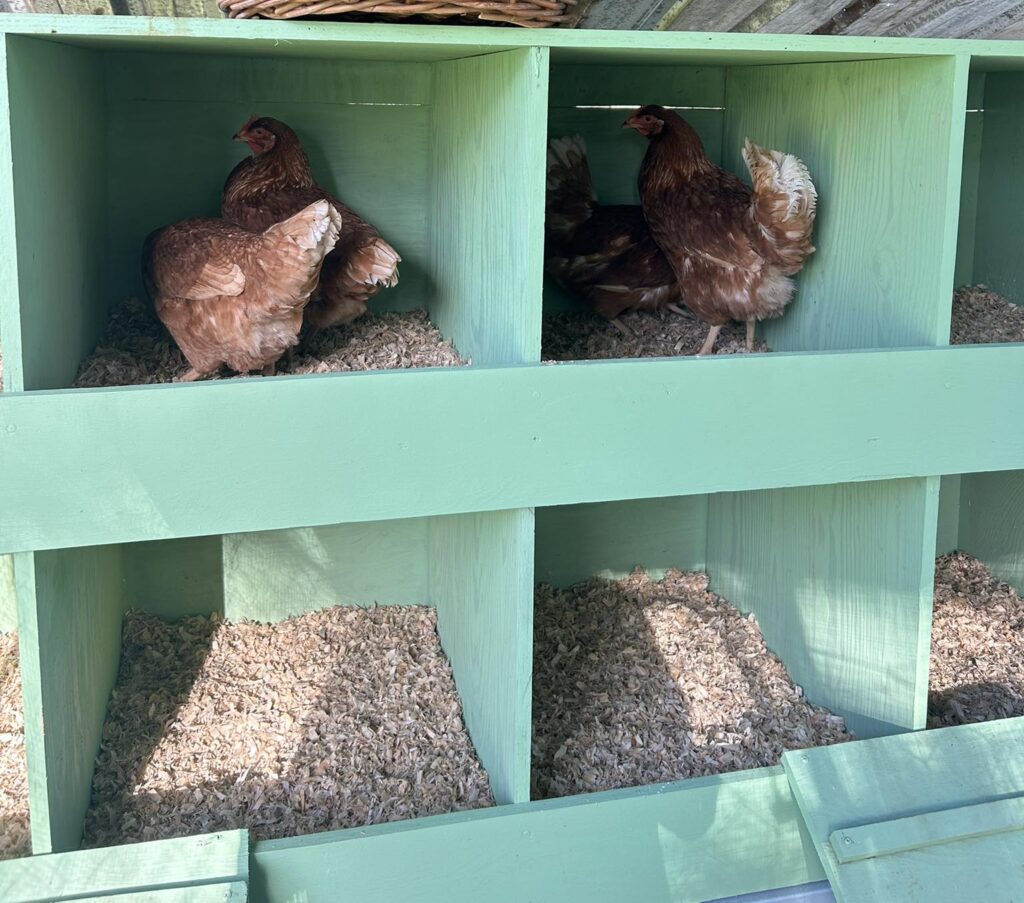
Broodiness occurs when elevated prolactin suppresses reproductive hormones. The hen stops laying to incubate eggs. She sits in the nest box day and night, puffs up, growls when disturbed, and plucks chest feathers for a brood patch. Her droppings grow larger and smellier. Silkies, Orpingtons, and Cochins show higher broody tendencies than Leghorns.
To break broodiness, remove eggs daily and block favorite nest boxes. Place the hen in a separate cage with a wire floor and no nesting material for 3 to 7 days. Ensure constant access to feed and water; broody hens lose weight fast. Return her to the flock when normal activity resumes. Laying restarts in 1 to 4 weeks. Understanding broodiness is essential when why are my chickens not laying eggs because the fix is behavioral.
If you want chicks, let the broody hen sit on fertile eggs. Accept the 3- to 5-week production loss. For egg-focused keepers, break broodiness quickly before other hens copy the behavior. Either way, broodiness explains many cases of why are my chickens not laying eggs among certain breeds.
Age-Related Decline
Hens do not lay indefinitely. Ovarian function gradually slows, lengthening time between ovulations. Peak production hits around 30 weeks. By year three, expect 15 to 20 percent fewer eggs annually. Combs may pale between lays. By ages 6 to 8, many hens produce only 10 to 20 percent of their first-year output.
Add younger pullets each year to keep total egg supply stable. Keep older hens as companions if space allows; they provide social stability. When why are my chickens not laying eggs and birds are over 3 years old, age is likely the primary driver. Adjust your flock rotation plan accordingly.
Do Chickens Stop Laying Eggs in Winter? Seasonal Triggers and Molting
Shortened daylight is the biggest seasonal trigger for reduced laying. Hens need 14 to 16 hours of light daily. As autumn day length drops below 12 to 13 hours, hens gradually reduce output and may stop entirely. This is hormonal, not a disease. If you are wondering why are my chickens not laying eggs every November, photoperiod is almost certainly involved.
Light stimulates the hypothalamus-pituitary axis to release hormones that drive follicle development and ovulation. When daylight is too short, hormone levels fall and follicles regress. Hens at higher latitudes experience stronger dips. Pullets maturing in late autumn at northern latitudes may struggle to start without supplemental light.
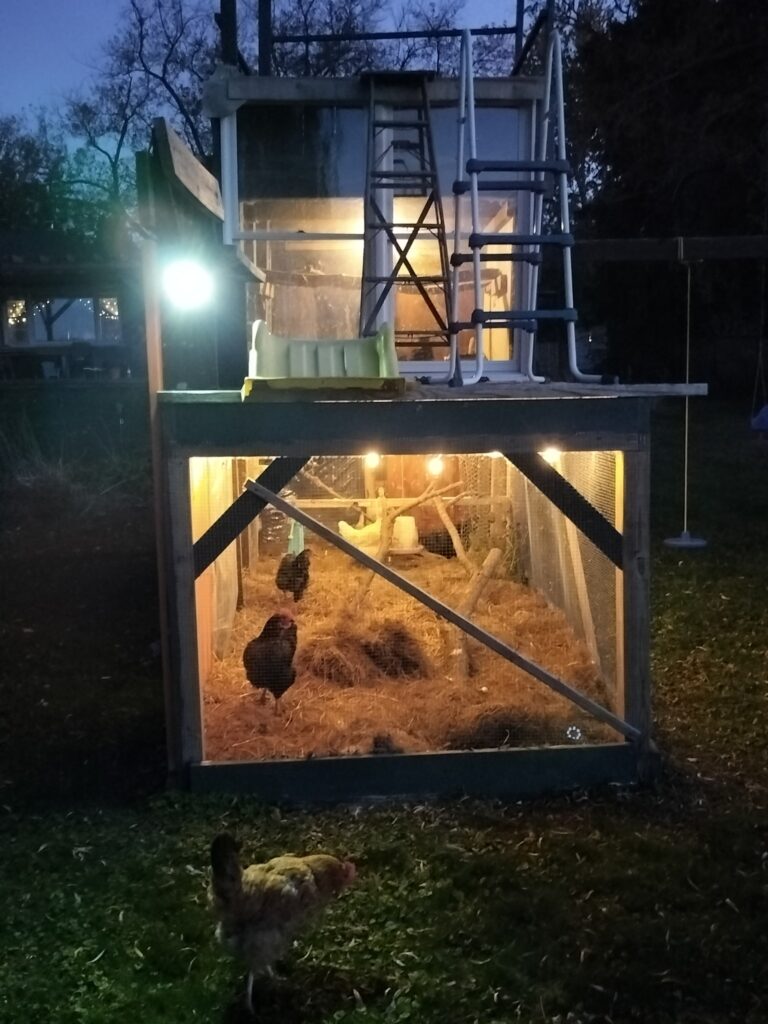
The fix is direct. Install a 40 to 60-watt-equivalent LED bulb on a timer. Deliver 14 to 16 hours total, adding light in early morning. The LITOM Solar Chicken Coop Light (~$26 on Amazon) has a timer and needs no wiring. Light restores production within 1 to 3 weeks if nutrition and health are sound. This single change answers why are my chickens not laying eggs for thousands of keepers every winter.
Balance light with ventilation. Insulate against drafts but keep roof-level vents open to remove humidity. Wet cold is harder on hens than dry cold. If why are my chickens not laying eggs during fall and winter, address lighting first. Most flocks resume full production once photoperiod is corrected.
Molting: What to Expect
Molting confuses more beginners than any other cause. The first adult molt hits at 16 to 18 months, often in autumn, then repeats yearly. You will see feather loss, bald patches, and a complete halt in laying. High producers molt fast. Poor layers molt slowly and may stay out for half a year.
The rule of thumb is 8 weeks from feather loss to full replacement, ranging 4 to 12 weeks. Support birds with quality feed and minimal handling. Do not force production with lighting or supplements; pushing a molting bird risks health damage. When why are my chickens not laying eggs suddenly in autumn, check for pin feathers before assuming illness.
Feed 18 to 20 percent protein during molt. The Manna Pro Feather Fixer (~$24 on Amazon) is formulated for this purpose. Offer from first feather loss until full regrowth, then transition back over 7 days. Targeted nutrition shortens molt and gets hens laying faster.
Nutritional Causes: Feed Quality and Label Decoding
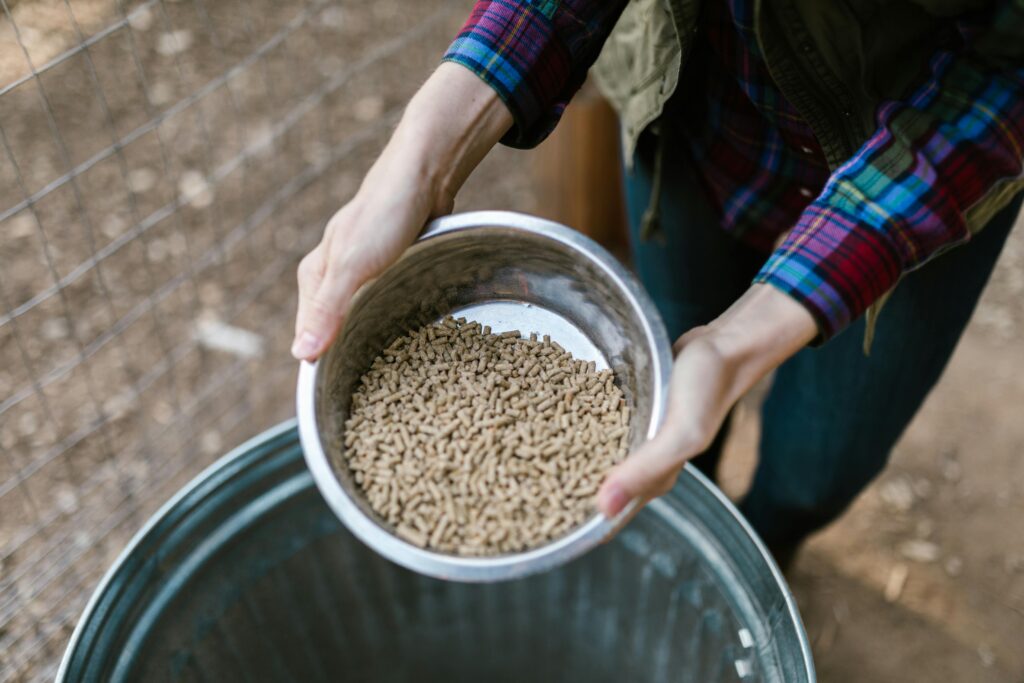
Nutrition is the most common manageable cause of reduced laying. When the diet lacks critical nutrients, reproduction shuts down first. If why are my chickens not laying eggs and you ruled out molting, broodiness, and winter light, look at your feed label. Most nutritional deficiencies resolve in 1 to 3 weeks.
Laying hens require 16 to 18 percent crude protein. Deficiency signs include reduced laying, smaller eggs, feather pecking, and poor molt recovery. Birds eating mostly scratch or scraps fall below requirement even if they look well-fed.
Calcium drives shell formation. Each shell uses 2 to 2.5 grams; hens need 4 to 5 grams daily. Layer feed should contain 3.5 to 4.5 percent calcium. Shortage produces thin, brittle shells. Vitamin D3 and phosphorus are equally critical; without D3, hens cannot absorb calcium. If why are my chickens not laying eggs after a feed change, the new formula is the cause.
Feed label literacy separates effective keepers from frustrated ones. The guaranteed analysis lists protein, fat, fiber, calcium, and phosphorus. Proper layer feed shows a minimum of 16 percent protein and 3.5 percent calcium. Anything lower is not for active layers. Learning to read labels prevents future episodes of why are my chickens not laying eggs.
Phosphorus works in partnership with calcium. Layer diets need a calcium-to-phosphorus ratio between 4:1 and 6:1. Excess phosphorus blocks calcium absorption and produces the same thin shells as calcium deficiency. Most commercial feeds balance this correctly, but keepers who add supplements without understanding the ratios can accidentally create the problem they are trying to solve. Read the full mineral panel, not just individual numbers, when why are my chickens not laying eggs.
Reading Labels and Fixing Deficiencies
When why are my chickens not laying eggs, the feed bag is the first place to audit. The right ration fixes the problem within days. This section covers label decoding and product selection.
Look for these numbers. Crude protein: 16 to 18 percent minimum. Calcium: 3.5 to 4.5 percent. Phosphorus: 0.5 to 0.8 percent with a 4:1 to 6:1 calcium-to-phosphorus ratio. Fat: 2.5 to 4 percent. Fiber: under 6 percent. If your feed misses benchmarks, switch immediately. The Purina Layena Plus Omega-3 (~$28 on Amazon) hits all targets.
Offer free-choice oyster shell in a separate container. The Manna Pro Oyster Shell (~$18 on Amazon) provides large particles hens prefer. Place near the waterer. Hens eating more shell signal insufficient dietary calcium. Listen when why are my chickens not laying eggs despite seemingly adequate feed.
Limit scratch and scraps to 10 percent of intake. Corn-heavy scratch is low in protein and calcium. The Kalmbach Feeds 17% Layer (~$32 on Amazon) works for mixed-age flocks. Transition feed gradually over 7 days. Store in a cool, dry place; use opened bags within 30 days. Degraded D3 silently triggers why are my chickens not laying eggs in keepers who do not track freshness.
Hydration and Environmental Stress: Hidden Production Killers
Water is the most overlooked nutrient. Hens drink 200 to 300 milliliters daily at normal temperatures, rising above 500 milliliters above 29 degrees Celsius. Eggs are 65 percent water. When intake drops, production halts within 24 hours. If why are my chickens not laying eggs during a heat wave, dehydration is the prime suspect.
Provide constant access to clean, cool water. Multiple drinkers prevent dominant birds from blocking access. The Harris Farms Heated Poultry Drinker (~$45 on Amazon) prevents freezing in winter. In summer, change water twice daily and shade drinkers. Heat stress causes panting and suppressed laying within hours.
Cold and humidity also suppress production. Chickens tolerate dry cold but suffer in damp conditions. Wet litter increases ammonia levels, which irritate the airways. Maintain roof-level vents without drafts. Give each bird 4 square feet indoors and 10 square feet in the run. Overcrowding worsens temperature extremes. Proper spacing removes another trigger when why are my chickens not laying eggs and weather varies.
Predator pressure and noise disrupt laying too. Secure the coop with hardware cloth, bury wire six inches deep, and lock doors at dusk. Position the coop in a quiet corner. Reducing environmental stress is foundational to why are my chickens not laying eggs.
Health and Disease: When to Call the Vet
Infectious diseases, parasites, and reproductive disorders stop laying. If why are my chickens not laying eggs and birds show illness signs, call a veterinarian. Early diagnosis saves the flock. This section covers the most common health culprits.
Respiratory diseases, including infectious bronchitis, Newcastle disease, and Mycoplasma, target both respiratory and reproductive tracts. Bronchitis produces thin shells even after symptoms resolve. Newcastle causes sudden drops with nervous signs. Mycoplasma creates chronic coughing. Vaccination prevents most outbreaks. When my chickens are not laying eggs alongside sneezing, respiratory infection is likely.
External parasites drain blood and energy. Red mites cause pale combs from anemia. Lice disrupt feeding. Internal worms compete for nutrients. A fecal exam identifies worm loads; dewormers clear most infestations in days. If your chickens are not laying eggs, have pale combs, are scratching, or are losing weight, parasites are likely.
Reproductive disorders need immediate attention. Egg yolk peritonitis causes infection and abdominal swelling. Salpingitis inflames the oviduct. Emergency signs include a sulfur smell from the vent, blue comb, or inability to stand. These are life-threatening and demand care within hours. When why are my chickens not laying eggs alongside these red flags, transport the bird immediately.
Management Mistakes That Stop Hens From Laying
Even experienced keepers make errors that halt production. When why are my chickens not laying eggs despite good feed, water, and housing, check your daily routines.
Abrupt feed changes reduce intake for days. Transition gradually over 7 days. Adding new birds disrupts the pecking order. Quarantine for 2 to 4 weeks and introduce through a shared fence. Moving the coop or construction noise drops production for 1 to 3 weeks.
Infrequent collection creates problems. Eggs left in boxes attract investigation; broken shells teach hens that eggs are edible. Collect at least twice daily. Vaccination can cause temporary dips. Schedule during lower-production periods. When my chickens are not laying eggs after management changes, give the flock 1 to 2 weeks before escalating.
Lighting mistakes are common. Too little winter light stops production. Too much artificial light without dark roosting time creates stress. Aim for 14 to 16 hours of light with 8 to 10 hours of darkness. Use a reliable timer. Simple discipline prevents many cases of why are my chickens not laying eggs.
Temporary vs. Chronic Problems and Daily Monitoring
Not every drop signals a crisis. Distinguishing temporary from chronic saves worry and expense. When why are my chickens not laying eggs, ask how long the decline has lasted.
Temporary dips lasting 7 to 14 days are attributable to heat waves, storms, feed transitions, or minor scares. Hens remain bright and active. Chronic issues persist 3 to 4 weeks or more with multiple factors. Ongoing deficiencies, parasites, or poor lighting produce prolonged low production. Hens may show weight loss or pale combs. If your chickens are not laying eggs for over a month, move to full diagnostic mode.
Use three indicators. First, droppings: normal feces are firm with white urate caps. Persistent diarrhea suggests disease. Second, combs: bright red means active laying; pale signals anemia. Third, weight and behavior: gradual loss and lethargy point to parasites. These checks give objective criteria for why my chickens are not laying eggs.
Dust bathing is essential for feather health and parasite control. Hens without access to loose soil or sand for dust bathing develop stressed plumage and elevated parasite loads, both of which indirectly suppress laying. Provide a dust bath box with a mix of clean soil, wood ash, and diatomaceous earth in a covered area protected from rain. This simple enrichment supports the overall health foundation that prevents why are my chickens not laying eggs in the first place.
Your 5-Point Daily Checklist
A 5-minute daily routine catches problems early. When why are my chickens not laying eggs, this checklist is your diagnostic backbone. Run it every morning.
First, inspect eggs and laying pattern. Collect once or twice daily. Note changes in count, shell quality, or hidden nests. Second, check feed and water. Confirm that containers are full, clean, and accessible. Hens need constant layer ration and 200 to 300 milliliters of water daily. Third, examine combs, wattles, and eyes. Bright red combs with clear eyes indicate health. Pale combs signal disease.
Fourth, observe droppings and bedding. Normal feces are firm. Watch for diarrhea, blood, or worms. Keep bedding dry. Fifth, assess body condition. Look for normal walking and preening. Check for feather loss beyond molt and watch for parasites. Any deviation helps pinpoint why your chickens are not laying eggs before the issue escalates. Write observations in a log; patterns emerge that single checks miss.
Quarantine new birds for 2 to 4 weeks before integrating them with your flock. Newcomers can carry diseases, parasites, and stress that spread rapidly in close quarters. A separate pen with its own feed and water prevents cross-contamination. Use this period to observe the new birds for any signs of illness or abnormal behavior. Biosecurity discipline is a frontline defense against health-related episodes of why are my chickens not laying eggs.
Recovery Protocol and When to Seek Help
Implement corrections in the right order for fastest results. When why are my chickens not laying eggs, work through these seven steps.
Step one: stabilize basics. Confirm clean water, complete layer ration with 16 to 18 percent protein and 3.5 to 4 percent calcium, and 14 to 16 hours of winter light. These cover 80 percent of non-disease causes. Step two: check age and natural cycles. Confirm whether hens are molting, broody, or over 3 years old. Natural pauses need patience.
Step three: assess environment for temperature, ventilation, and recent changes. Step four: audit nutrition. Reduce treats to under 10 percent, add oyster shell, verify feed freshness. Step five: health screen. Examine for parasites, check droppings, note respiratory signs. Step six: track for 2 to 4 weeks. Most problems improve in 1 to 3 weeks once basics are corrected. Step seven: escalate to veterinary care for sulfur smells, blue combs, or multiple deaths. This protocol prevents the scattered approach that frustrates keepers asking why are my chickens not laying eggs.
When to Worry vs. When to Wait
Knowing when to monitor and when to act is critical. When why are my chickens not laying eggs, use this framework.
Wait for mild, short-term drops of 20 to 50 percent under 10 days. If hens remain bright with normal droppings and you can identify a stressor, give them time. Intervene within 24 to 48 hours for ongoing decreases with soft shells or nutritional gaps. Parasites, wet bedding, or overcrowding demand prompt correction.
Call a veterinarian immediately if the entire flock stops laying due to severe illness. Individual hens with abdominal swelling, a sulfur odor, blue combs, or prostration require emergency care. Persistent severe diarrhea or weight loss that does not improve requires diagnosis. When why are my chickens not laying eggs alongside red flags, time is critical.
Your Action Plan: Why Are My Chickens Not Laying Eggs and What to Do Now
Start your diagnosis today. Check water, feed, light, and bedding first. Look at combs, droppings, and behavior. Count eggs and examine shells. Match findings to the seven cause categories. Most keepers who ask why are my chickens not laying eggs discover two or three overlapping factors.
Fix basics before chasing exotic diseases. Upgrade to quality layer feed with proper protein and calcium. Add oyster shell and clean water. Collect eggs twice daily. Install lighting if winter days are short. Give changes 1 to 2 weeks. These fundamentals resolve most drops without veterinary bills.
Track everything in a written log. Egg counts, shell quality, feed changes, weather, and behavior reveal patterns memory misses. That log becomes invaluable if you need veterinary help.
For deeper shell quality guidance, read our complete guide to soft or misshapen eggshells. If building your first flock, explore the best chicken breeds for small backyards. For research-backed standards, consult the Penn State Extension guidelines on raising chickens for eggs. Bookmark this page and return whenever you find yourself asking why are my chickens not laying eggs; the answer is in these seven causes.