Practical backyard chicken guides for beginners.

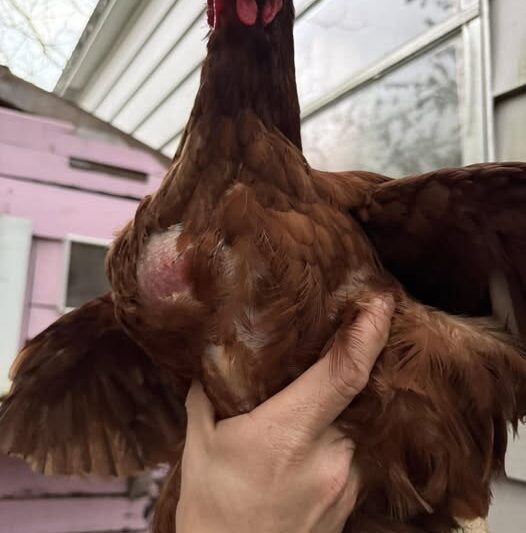
When you notice your hen’s crop is still full and squishy first thing in the morning, sour crop in chickens is the condition you need to rule in or out immediately. This fungal infection of the crop lining, technically called crop mycosis, affects backyard flocks worldwide and can progress from a minor digestive upset to a life-threatening emergency within 48 hours. Recognizing sour crop in chickens early, understanding how to treat sour crop in chickens safely, and implementing prevention protocols that actually work will determine whether your bird recovers fully or requires expensive veterinary intervention.
This guide gives you a systematic, prevention-first approach to identifying, treating, and preventing sour crop in chickens. Every protocol here aligns with veterinary guidance from university extension programs and the Merck Veterinary Manual. Whether you are checking your first flock at 6 AM or building a long-term health management system, this article provides the actionable framework you need.
What Is Sour Crop in Chickens?
Sour crop in chickens is a fungal infection of the crop lining caused primarily by Candida albicans overgrowth. This yeast organism exists in small, balanced amounts in the digestive tracts of healthy chickens. When that balance breaks down due to crop stasis, antibiotic disruption, or environmental stress, the yeast multiplies rapidly and colonizes the crop lining.
The result is fermentation of crop contents, a characteristic sour odor, and progressive digestive failure. The condition is not merely an upset stomach. Sour crop in chickens represents a secondary infection that signals an underlying management or health issue requiring immediate attention. The Merck Veterinary Manual identifies Candida albicans as the primary fungal agent responsible for crop mycosis in poultry. Beginners often misdiagnose this condition as general malaise or egg-binding, losing critical treatment hours.
Understanding exactly what sour crop in chickens looks like, smells like, and feels like gives you the diagnostic speed that saves birds. According to research from the Penn State Extension on poultry health management, crop disorders, including sour crop, rank among the most common digestive conditions that backyard keepers encounter.
This validation from a university extension program underscores why every beginner needs a systematic response plan for this condition. The 128 question variations around this condition that appear in search data every month reveal a clear pattern. Keepers are not looking for textbook definitions at 6 AM when they find a sick bird. They need to know how to treat sour crop in chickens right now, with steps they can follow before the vet opens.
What Does Sour Crop Look Like? Recognizing the Visual Signs
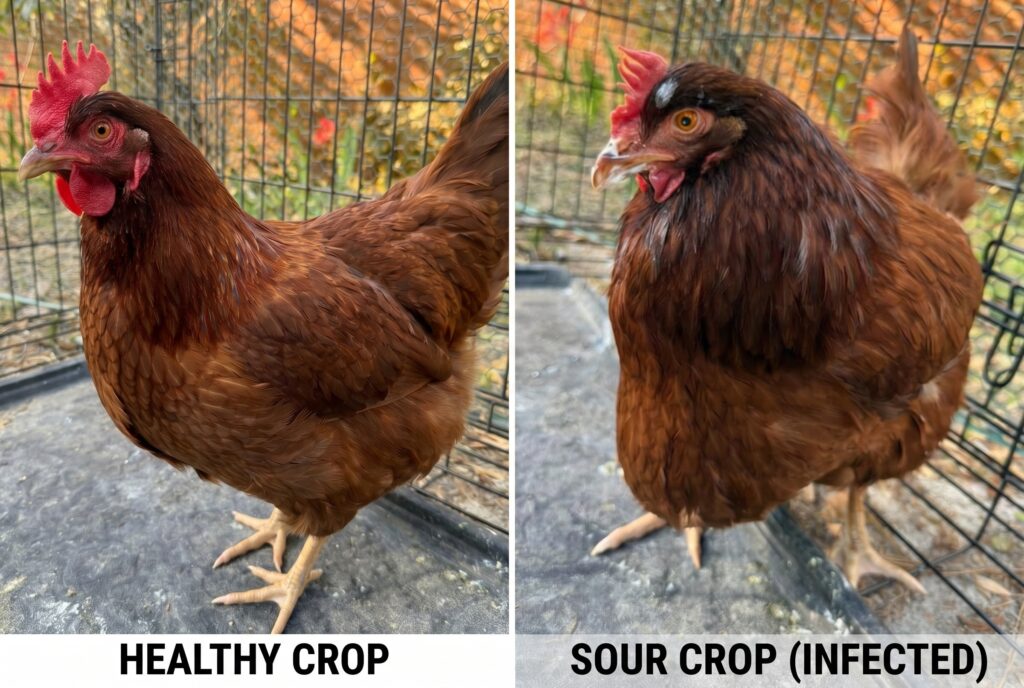
Beginners searching for pictures of sour crop in chickens need clear visual benchmarks. In the early stage, the bird may simply appear slightly “off” with a crop that feels soft and squishy rather than firm and empty first thing in the morning.
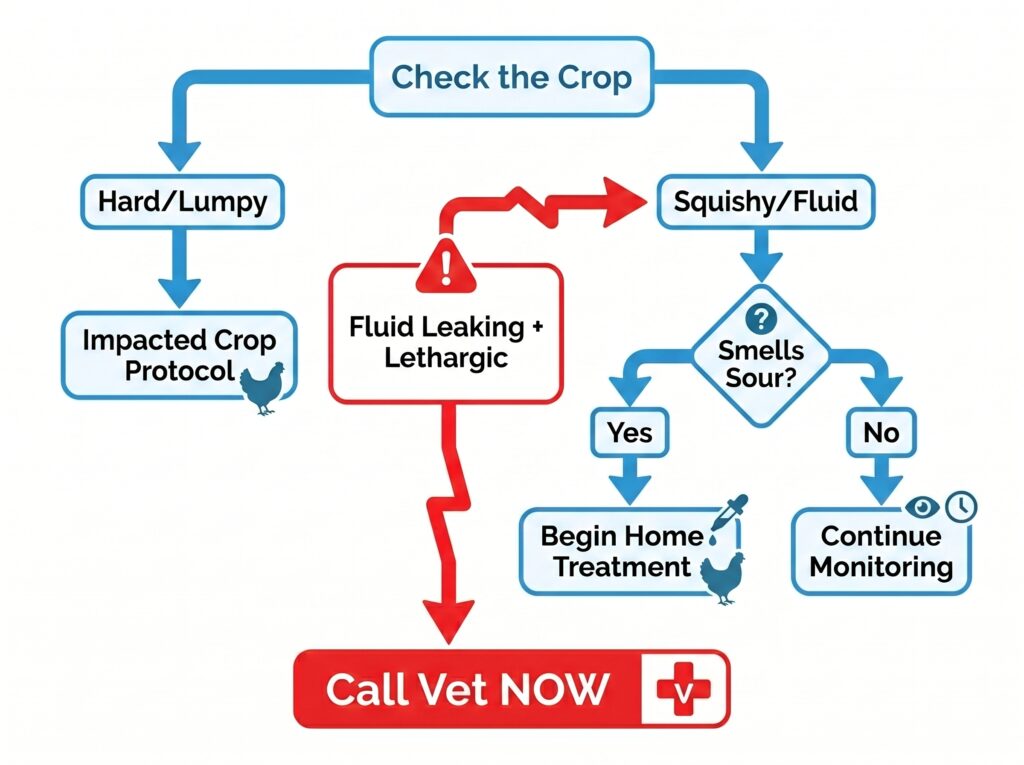
The crop area sits at the base of the neck on the right side and should normally be flat or barely noticeable before the bird eats breakfast. This is your first checkpoint. Gently palpate the crop area before the bird has access to morning feed. A healthy crop feels firm and relatively flat. A squishy, fluid-filled crop signals the beginning of a sour crop in chickens.
As the condition progresses to the intermediate stage, the crop becomes distinctly fluid-filled and squishy like a water balloon. The bird may hold its head slightly tucked and show reduced interest in feed. The breath odor shifts from neutral to faintly yeasty or sour. These intermediate signs mean you need to start treatment within hours, not days.
In advanced cases, the crop distends visibly, the bird becomes lethargic and loses weight, and fluid may leak from the beak when the bird is handled. At this stage, the risk of aspiration pneumonia rises significantly, making how to treat sour crop in chickens a time-critical decision. Advanced sour crop in chickens requires immediate veterinary consultation alongside your home protocol.
Sour Crop vs Impacted Crop vs Pendulous Crop
The single most common diagnostic error among beginners is confusing sour crop in chickens with impacted crop or pendulous crop. These three conditions require fundamentally different treatments. Applying the wrong protocol can kill a bird. Use this diagnostic table whenever you check a bird for crop abnormalities.
| Condition | Crop Texture | Odor | Primary Cause | Treatment Strategy |
|---|---|---|---|---|
| Sour Crop | Squishy / Fluid-filled | Sour / Fermented | Candida yeast overgrowth | Antifungals + crop acidification |
| Impacted Crop | Hard / Solid mass | None or mild | Long grass, string, foreign material | Lubricants + downward massage |
| Pendulous Crop | Stretched / Floppy | Variable | Chronic overstretching | Supportive bra + veterinary surgery |
When evaluating sour crop in chickens versus impacted crop, the smell test gives you the fastest answer. Sour crop in chickens produces a distinct fermented or bread-like odor from the beak. An impacted crop typically presents no significant odor but feels hard and solid on palpation. If you feel a hard mass rather than a squishy fluid sac, stop immediately and switch to the impacted crop protocol instead.
The Niteangel Anti-Pick Chicken Vest (~$18 on Amazon) serves as an excellent supportive bra for managing a pendulous crop while you arrange veterinary care. Learning how to treat sour crop in chickens starts with getting the diagnosis right. Never begin any treatment protocol until you have confirmed which crop condition you are facing.
What Causes Sour Crop? The Three Primary Triggers
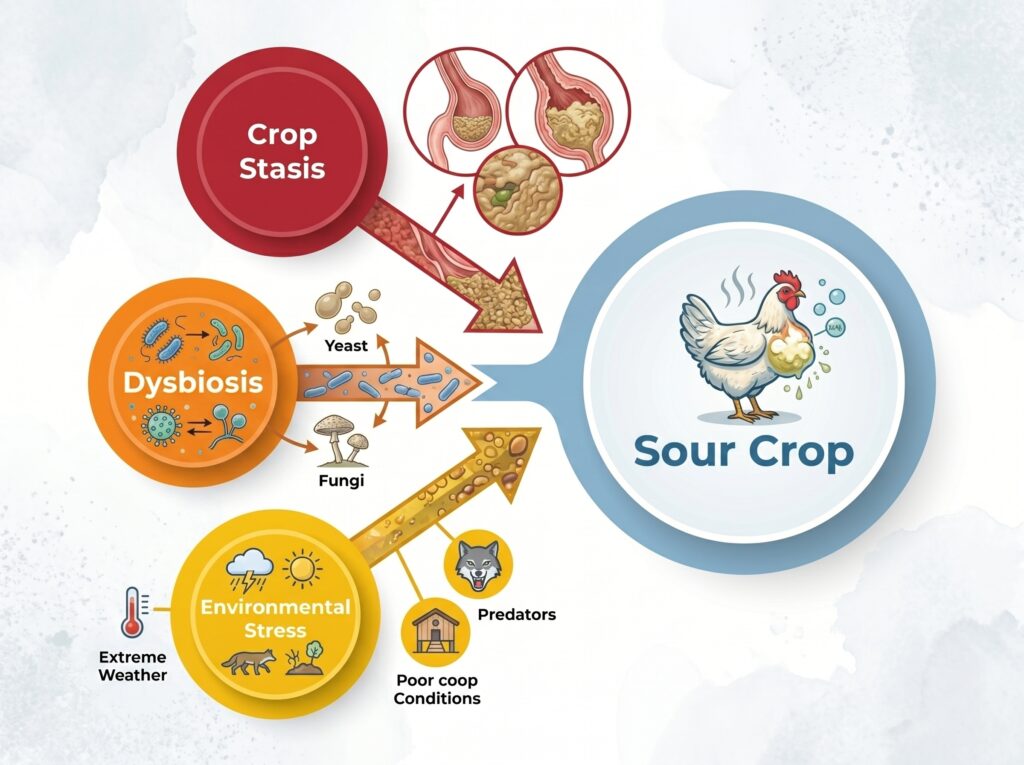
Three distinct triggers initiate sour crop in chickens. Understanding each one lets you build prevention protocols that actually work. These triggers often overlap in practice, so identifying the primary driver in your flock requires systematic assessment.
Crop stasis represents the most common trigger. When food sits in the crop too long due to impaction, slow emptying, or feeding too late in the day, fermentation begins, and yeast proliferates. The Manna Pro Chick Grit (~$12 on Amazon) supports proper crop grinding and passage, reducing the risk of stasis in flocks that lack access to coarse substrates.
Dysbiosis from antibiotic use or sudden dietary changes kills the beneficial bacteria that normally suppress Candida. If you have recently treated your flock with antibiotics for any respiratory or wound condition, monitor closely for secondary sour crop in chickens during and after the antibiotic course. The beneficial gut flora takes weeks to fully restore after antibiotic therapy.
Environmental stress and poor hygiene complete the set of triggers. Contaminated water sources and high-humidity coop environments create ideal conditions for fungal growth. Sour crop in chickens rarely appears in isolation. When one bird shows symptoms, audit all three trigger categories immediately to protect the rest of your flock.
Early Signs vs Advanced Symptoms of Sour Crop in Chickens
Catching this condition during the early stage determines treatment success. Early signs include a bird that seems slightly lethargic with a crop that has not emptied overnight. The breath may carry a faint yeasty smell. The bird may still eat but shows less enthusiasm than usual.
At this early stage, how to treat sour crop in chickens focuses on crop evacuation and environmental correction. The condition often resolves within 24 to 48 hours with proper intervention. Do not wait to see if it gets better on its own. Early action separates the keepers who save birds from those who lose them.
Intermediate symptoms escalate quickly. The crop feels fluid-filled and squishy on palpation, the sour or fermented odor becomes unmistakable, and the bird loses interest in regular feed. You may notice the bird isolating itself from its flock mates. These intermediate signs require the full five-step treatment protocol without delay.
Advanced sour crop in chickens presents visible distress, pronounced lethargy, weight loss, and fluid leaking from the beak during handling. The crop feels like a water-filled balloon that sloshes when gently moved. At this stage, sour crop in chickens becomes a veterinary emergency due to aspiration pneumonia risk and severe dehydration. Understanding how to treat sour crop in chickens at home has limits, and advanced cases cross that line into professional care territory.
How to Treat Sour Crop in Chickens at Home
The treatment protocol for sour crop in chickens follows a strict sequence. Do not skip steps or improvise outside this framework. How to treat sour crop in chickens requires precision, patience, and consistent monitoring over 48 to 72 hours.
Step one is isolation and fasting. Move the affected bird to a hospital crate with clean towels and separate ventilation. Withhold all solid food for 12 to 24 hours. Water access requires careful judgment. If the bird is actively leaking fluid from its beak, temporarily withhold water to prevent aspiration.
If no leakage is present, provide small amounts of fresh water or poultry electrolyte solution. The Roamerrestrial Hospital Crate (~$30 on Amazon) provides an ideal isolation setup with easy-clean surfaces and adequate ventilation for recovery monitoring. Isolation prevents flock mates from picking on a weakened bird and allows you to monitor food and water intake precisely.
Step two is the Epsom salt flush. Mix one teaspoon of Epsom salt per cup (250ml) of warm water. Administer 10 to 15 ml using a 1ml oral syringe, dosing slowly to avoid aspiration. The Sav-A-Chick Electrolyte and Vitamin Supplement (~$8 on Amazon) can replace plain water in this flush to support hydration while cleansing the crop.
Repeat this flush every 4 to 6 hours during the fasting period. Epsom salt acts as a laxative and crop evacuant, helping clear fermented material. Limit Epsom salt use to a maximum of 2 to 3 days. Overuse causes diarrhea and electrolyte imbalance.
this video is from Avian Empire page in facebook
Step three is a downward massage only. After each flush, gently massage the crop downward toward the exit point. Never apply upward pressure. Upward force risks pushing fermented fluid into the airway, causing fatal aspiration pneumonia.
Massage for 3 to 5 minutes, allowing the bird to rest between sessions. If the bird shows signs of distress during massage, stop immediately and consult a veterinarian. Proper massage technique is one of the most important elements in how to treat sour crop in chickens safely at home.
Step four is reintroduction with probiotics. After the fasting period, offer plain yogurt in tiny amounts or preferably poultry-specific probiotic powder. The Dukal 1ml Oral Syringe Pack (~$9 on Amazon) provides precise dosing capability for probiotic administration without overwhelming the recovering crop.
Avoid human yogurt when possible, as some chickens are lactose intolerant and avian-specific probiotics tend to be more effective. Reintroduction should be slow. Start with tiny amounts and monitor the crop’s response before returning to normal feed.
Step five is monitoring and escalation. If you see no improvement within 24 hours, or if the bird worsens at any point, contact a veterinarian immediately. Nystatin remains the gold-standard veterinary antifungal for confirmed sour crop in chickens and requires a prescription. Do not attempt to source human antifungal creams, such as Miconazole, without explicit veterinary guidance.
Keep a written log during treatment. Record the time of each flush, massage, and probiotic dose. Note any changes in crop texture, odor, and energy level. This log helps you track progress objectively and gives your veterinarian accurate data if you need to escalate care. Learning how to treat sour crop in chickens systematically includes documenting your process.
Can You Fix Sour Crop in Chickens Without a Vet?
Many backyard keepers want to know if sour crop in chickens can be resolved without veterinary bills. Early-stage sour crop in chickens often responds fully to the home protocol described above. If you catch the condition within the first 12 hours of symptom onset, fasting and Epsom salt flushes successfully clear most cases.
However, a sour crop in chickens becomes a non-negotiable veterinary situation under specific conditions. If the bird shows fluid leakage from the beak, total lethargy where the bird cannot stand, or crop distension that does not reduce after 24 hours of proper home treatment, call a veterinarian immediately.
Suspected secondary impaction also requires professional intervention. The treatment for impacted crop contradicts sour crop treatment in critical ways. Applying impacted crop massage and oil to a sour crop case can force fluid into the lungs.
Your honesty about when home treatment ends, and veterinary care begins, builds the trust that makes your flock management systematic rather than reckless.
The Precision Pet Products Chicken Carrier (~$32 on Amazon) provides safe transport to the vet without adding stress to an already compromised bird. Knowing how to treat sour crop in chickens includes knowing when to reach the limit of home care.
Is Sour Crop in Chickens an Emergency?
Whether a sour crop in chickens constitutes an emergency depends entirely on the stage. Early cases with slight crop fullness and mild odor are not an immediate emergency. You have a 24-hour treatment window to implement the home protocol and evaluate response.
This window gives you time to gather supplies, set up isolation, and begin treatment. Use that time productively rather than panicking.
Advanced sour crop in chickens with fluid leakage, severe lethargy, or visible dehydration is absolutely an emergency. The risk of aspiration pneumonia from regurgitated crop fluid creates a secondary condition that is more dangerous than the original infection. Birds in advanced stages require professional antifungal administration and supportive care that home keepers cannot provide.
When in doubt, call your veterinarian and describe the symptoms precisely. Most poultry veterinarians prefer a phone consultation over a keeper waiting too long and losing the bird. Document your observations so you can give the vet accurate information about progression.
How to Prevent Sour Crop in Chickens
Prevention of sour crop in chickens operates on three management fronts that work together as an integrated system. These protocols connect directly to your overall coop management strategy outlined in our guide to Raising Chickens for Beginners: The Best Backyard Setup Guide (2026), where proper ventilation and space allocation form the foundation of respiratory and digestive health.
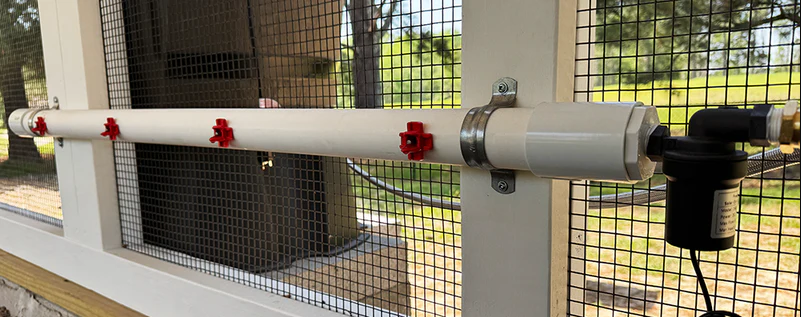
Water management is your first line of prevention. Open water bowls accumulate feed debris, dirt, and fungal spores, which can transfer directly to the crop. Switching to a horizontal nipple waterer system eliminates standing water contamination. The RentACoop 5-Gallon Nipple Waterer (~$38 on Amazon) provides clean water delivery that stays uncontaminated throughout the day, directly addressing one of the three primary sour crop triggers.
Feed storage and quality control form your second prevention front. Store all feed in airtight metal bins to prevent mold growth, and inspect feed weekly for dampness or musty odor. Moldy feed introduces fungal spores directly into the crop, creating the exact conditions that trigger sour crop in chickens. The Vittles Vault Stackable Feed Container creates a truly airtight seal that keeps feed fresh and mold-free in humid climates.
Ventilation and environmental management complete the prevention framework. High humidity in the coop promotes fungal growth on surfaces, bedding, and equipment. The University of Maryland Extension on common crop issues confirms that proper ventilation reduces airborne fungal spore concentration by up to 70% in enclosed poultry housing. Ensure high-volume airflow at the peak of your coop design to keep relative humidity below 60 percent.
If you are deciding how many birds your space can support without creating humidity problems, our article on ” How Many Chickens Should a Beginner Start With? provides square-footage calculations that prevent the overcrowding stress linked to crop infections.
Antibiotic stewardship represents the final prevention pillar. Never use antibiotics unless prescribed by a veterinarian for a specific diagnosed condition. Antibiotics are a leading cause of the dysbiosis that allows Candida overgrowth and subsequent sour crop in chickens. When antibiotics are medically necessary, follow treatment with a full course of poultry-specific probiotics to restore beneficial gut flora.
Prevention works better than any treatment protocol. The keepers who rarely deal with sour crop in chickens have built these management standards into their daily routine.
Water stays clean because the system prevents contamination. Feed stays fresh because storage is airtight. Air stays dry because ventilation is adequate. These are not expensive upgrades. They are management disciplines that cost nothing once established.
If you are serious about preventing sour crop in chickens long-term, audit your setup this weekend. Check your water system, inspect your feed storage, and measure humidity in your coop. Fix what you find. The 30 minutes you spend on prevention today eliminates the 6 AM emergency search for how to treat sour crop in chickens tomorrow.
FAQ: Common Questions About Sour Crop in Chickens
1: Is sour crop in chickens contagious to other flock members?
No, sour crop in chickens is not directly contagious. The Candida albicans yeast is present in most chickens’ digestive tracts without causing disease. However, if one bird develops sour crop, check your entire flock immediately because shared environmental triggers like contaminated water, moldy feed, or poor ventilation put all birds at risk. The underlying conditions causing a single case typically affect the entire flock.
2: How long does a sour crop in chickens take to heal with proper treatment?
Early-stage sour crop in chickens typically responds to home treatment within 24 to 48 hours, with the bird showing improved energy and reduced crop fullness by the second day. Intermediate cases may require 3 to 5 days of consistent treatment and monitoring. If you see no improvement after 48 hours of proper protocol, contact your veterinarian immediately, as the bird likely needs prescription antifungal medication.
3: Can a sour crop in chickens kill a bird if left untreated?
Yes, untreated sour crop in chickens can be fatal within 3 to 7 days, depending on severity. The primary cause of death is not the fungal infection itself but secondary complications, including aspiration pneumonia from regurgitated crop fluid, severe dehydration, and starvation. Advanced cases in which the bird cannot eat or drink require veterinary intervention within 24 hours to prevent death.
4: What is the correct Nystatin dose for sour crop in chickens?
Nystatin dosing for sour crop in chickens varies with bird weight and infection severity and requires a veterinary prescription. The typical veterinary protocol ranges from 100,000 to 300,000 IU per bird, administered orally twice daily, but the exact dose must be determined by a veterinarian who examines your bird. Never use human antifungal creams or guess dosages, as incorrect administration can cause serious harm or death.
5: Can I prevent sour crop in chickens with apple cider vinegar in their water?
Apple cider vinegar helps maintain an acidic crop environment that discourages yeast overgrowth, making it a useful preventive tool at a concentration of 1 tablespoon per gallon of water. However, ACV is not a treatment for established sour crop in chickens. Once Candida overgrowth is confirmed, the bird needs the full treatment protocol, including fasting, Epsom salt flushes, and, if needed, veterinary antifungals. Use ACV as prevention, not a cure.
Conclusion: Build Your Sour Crop Response System Today
Sour crop in chickens demands a systematic response, not panic. You now have the diagnostic framework to distinguish sour crop from impacted crop and pendulous crop. You understand how to treat sour crop in chickens with a validated five-step protocol. You have the prevention checklist that stops infections before they start.
The keepers who lose birds to this condition are those who wait, guess, or apply the wrong treatment. You are now equipped to do none of those things. Learning how to treat sour crop in chickens is a core competency every backyard keeper must develop before they need it.
Download the free Sour Crop Emergency Checklist from this page and print a copy for your coop. Post it where you will see it during those 6 AM flock checks when decisions matter most. The 10 minutes you spend reviewing this guide today could save a bird’s life next month. For more systematic chicken health protocols, bookmark our full beginner’s resource library and check back monthly for updated veterinary guidance.